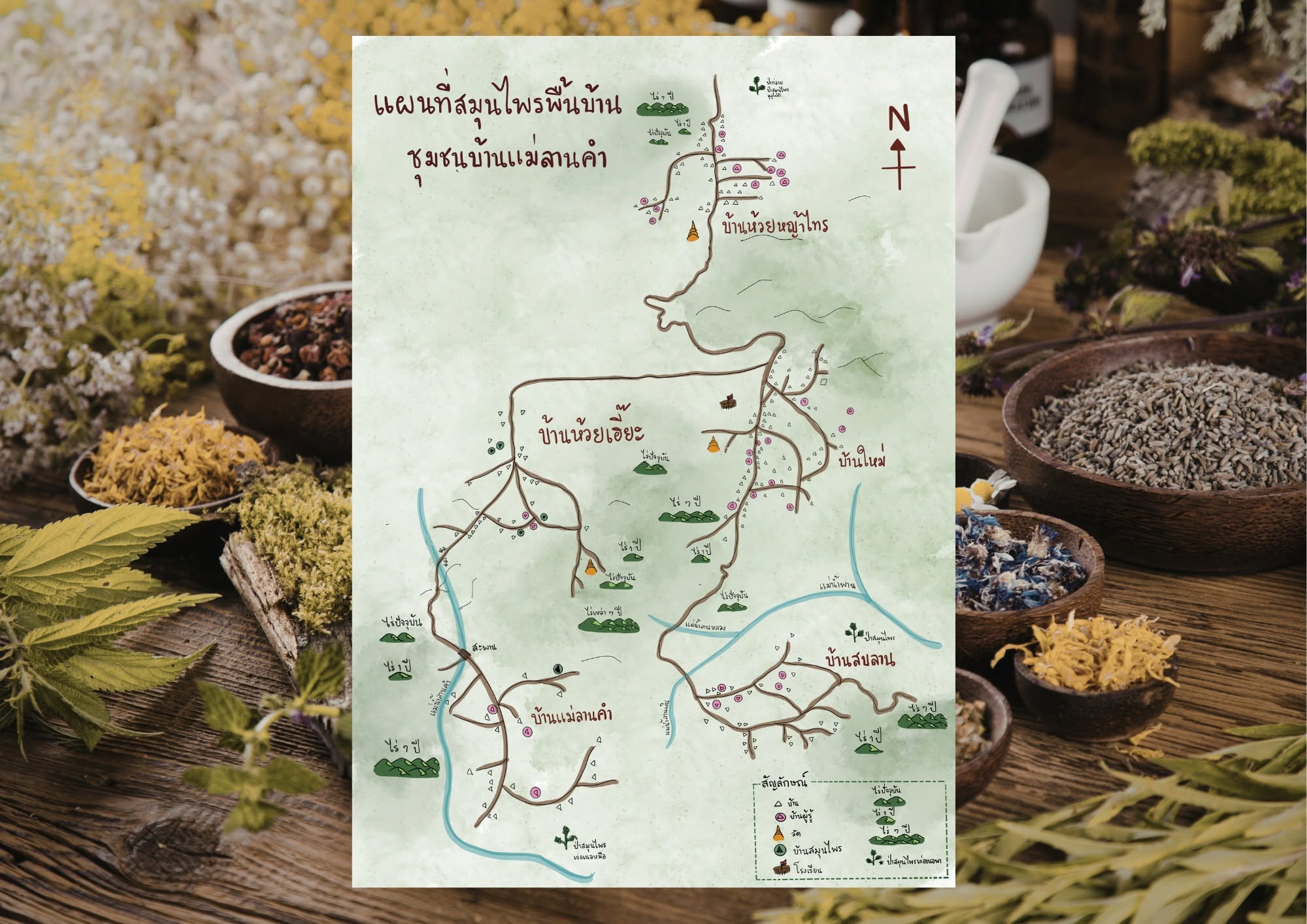
The community of Ban Mae Lan Kham, Samoeng District, Chiang Mai Province, continues to sustainably manage its forests and natural resources, passing on traditional knowledge to younger generations. This is especially true regarding the use of local herbs, which play a crucial role in maintaining community health, conserving biodiversity, and preserving traditional ways of life.
The medicinal plants presented here include Siam weed leaves, Turmeric, and Phlai (a type of herb), all of which are found in the community and have been used in daily life for a long time through the wisdom of the local people.

The leaves of the Siam weed (Chromolaena odorata) are a popular herb used to treat fresh wounds, helping to stop bleeding and reduce inflammation. Villagers often crush the leaves and apply them as a poultice to wounds. Additionally, the leaves are boiled in water and used as a bath to reduce rashes or itching from insect bites, and it is also believed to help treat stomach ulcers. It plays an important role in basic healthcare within the community.

Turmeric is a herb used in both food and medicine. It has properties that help reduce bloating and flatulence, improve digestion, and reduce inflammation. Locals also commonly use it in poultices or to treat skin rashes and certain infections. Furthermore, turmeric is an integral part of traditional cuisine, reflecting the connection between food and health.

Phlai is a traditional herbal plant long used by the Pgaz K’Nyau people. Its young shoots, leaves, stems, and rhizomes can all be used in various ways, such as in cooking, making herbal drinks, or as traditional remedies to relieve bloating, expel gas, and restore the body. It is also used in herbal compresses to soothe body aches and bruises, reflecting respect for nature and the balanced use of natural resources.
Knowledge about these medicinal plants is not only about healing illnesses, but also reflects the relationship between people and the forest, learning from nature, and passing wisdom from elders to youth within the community. This knowledge forms an important foundation for preserving both cultural heritage and biodiversity for future generations.