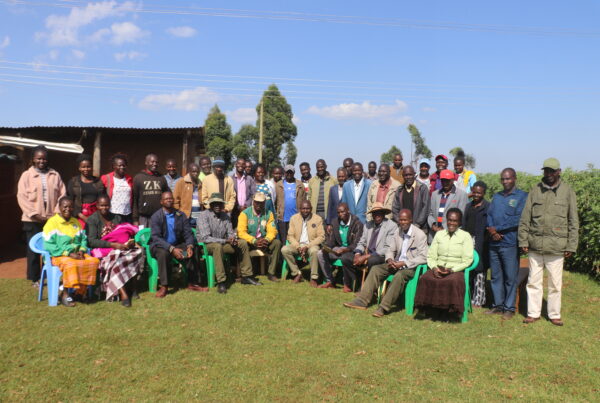
A meeting in Kitale, Kenya, on 13th March 2026, brought together participants from the state, research organisations and communities to discuss collaborative biodiversity conservation. The meeting was intended to showcase community-based biodiversity monitoring and Ogiek traditional stewardship, to assess the status of Mt. Elgon ecosystem, and to identify opportunities for collaboration and support. Participants acknowledged the critical role played by the Ogiek community in protecting the Mt. Elgon ecosystem and recognised the need to move beyond reactive engagement toward long-term partnership and trust-building.
The meeting, hosted by CIPDP, brought together participants from Kenya Wildlife Service (KWS) in Mt. Elgon National Park, Chorlim; Kenya Forest Service (KFS) in Kitale and Kimothon station; Wildlife Research Training Institute (WRTI) in Kitale; Ogiek of Chepkitale, and; Forest adjacent Communities (Trans-Nzoia and Mt. Elgon).
CIPDP board member, Mr. Martin Simotwo, requested the participants to take advantage of the workshop to openly address the issues affecting conservation of Mt. Elgon, without blaming other partners.
Professor Changeywo, Board Chairperson of CIPDP, called on KWS to work with the community, with regular patrols in areas where illegal activities have been noticed.
Stakeholder reflections
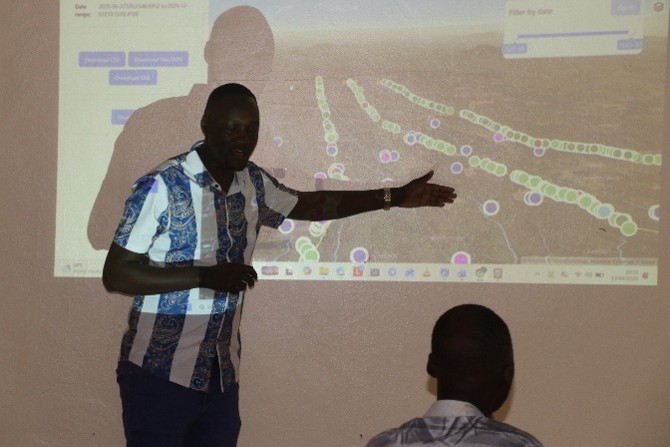
CIPDP presented ongoing work on biodiversity monitoring. Credit: CIPDP
CIPDP staff and community monitors presented ongoing work on biodiversity monitoring, land-use planning, participatory mapping, and livelihood support initiatives. Collins Ndiema shared a summary data analysis from monitoring work done in 2025, including the distribution of observations, threats (charcoal burning) and fire alerts.
The presentations demonstrated how community-led monitoring systems contribute to ecosystem management, data generation, and local conservation decision-making. The team also highlighted progress made in spatial planning and efforts to integrate conservation priorities with livelihood resilience.
Discussions highlighted customary governance systems, seasonal resource management, Indigenous ecological knowledge, and cultural stewardship practices that continue to support ecosystem conservation.
The Elders and women leaders explained their roles in customary governance, sustainable harvesting of forest resources for livelihoods and use of herbal medicine for their health needs. The preservation and continued transfer of traditional ecological knowledge to the young generation is critical to sustain the people and conserve biodiversity.
The forest adjacent community representatives proposed the need to be supported in livelihood diversification, such as sustainable agriculture, fruit tree farming, biogas systems and planting trees in degraded lands as a way of reducing overdependence for forest products as sources of energy.
CIPDP also supports forest adjacent communities’ access to small grants. Awarding small grants to Community based organisations (CBOs) can support sustainable land use and livelihoods.
The Chepyuk settlement scheme, for example, is an area of farmland without trees which is adjacent to the forest, and the residents have heavily depended on the forest for construction and fuel energy needs. It was proposed that there should be more support for conservation-focused livelihood projects within Chepyuk and surrounding areas.
Officers from state agencies highlighted the ongoing opportunities within the proposed amendments to forestry legislation and related policy frameworks. Participants noted the parliamentary notice of expanding the mandate of KFS to include drylands and farmland conservation, to attain the national 10% tree cover target.
The meeting emphasised the principle that conservation efforts should focus not only on planting trees but on ensuring long-term survival and management of trees.

Nancy Kelelyo, a Community Warden in Mt. Elgon N. Park, Chorlim, shares her thoughts. Credit: CIPDP
Research
An officer from the Wildlife Research Training Institute called for enhanced biodiversity research, animal census, and fire alert systems. He emphasised the need for enhanced biodiversity research and inventory work within Mt. Elgon, noting that the area has not undergone a comprehensive census for a significant period due to resource limitations.
He further indicated that “there are opportunities for collaboration such as having a joint biodiversity inventory, research partnerships via Memoranda of Understanding (MoU), and exchange programmes with other conservancies.”
Key Challenges
The meeting highlighted some challenges such as limited financial and technical resources, communication gaps among stakeholders, livelihood pressures and land-use change and some cases of human-wildlife conflict.
Next steps
The participants agreed to strengthen collaboration through dialogue and joint programmes towards conservation; establishing stronger communication mechanisms (digital platforms, WhatsApp groups) and building long-term partnerships grounded in trust. The meeting noted funding gaps and therefore, to unlock future opportunities, the need to develop joint proposals to mobilise resources for biodiversity inventory, census, fire management and other areas.
The participants further encouraged the use of Indigenous knowledge and traditional practices to promote conservation of biodiversity, to back up other efforts by conservation agencies.
The meeting reaffirmed the critical role of Indigenous-led conservation and the need for sustained partnerships among communities, government institutions, researchers, and development partners. Mobilising resources and strengthening collaboration will be key to ensuring the resilience of the Mt. Elgon ecosystem.