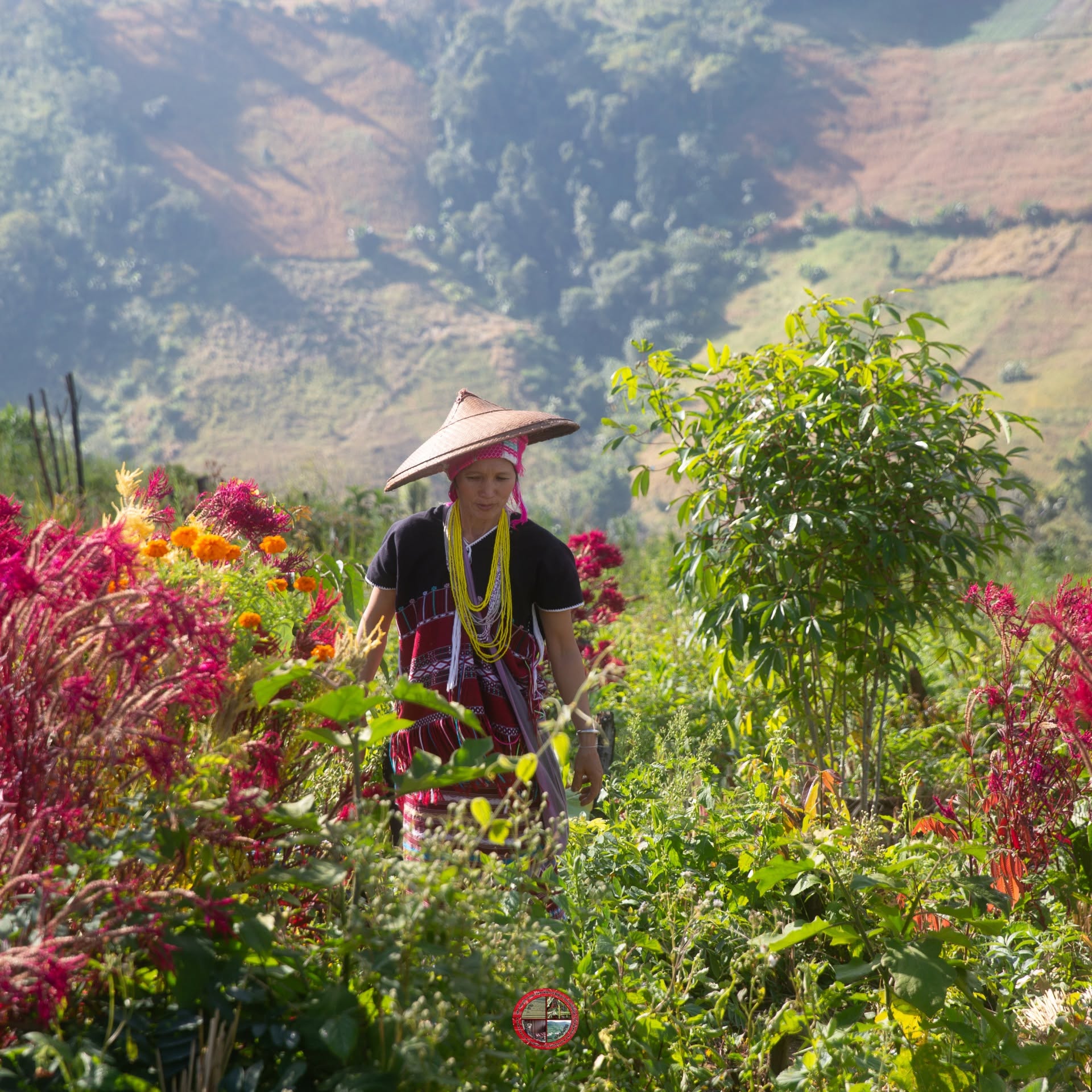
Rotational farming is a cultural practice and traditional wisdom in the livelihood of the Pga K’nyau people. The diversity within rotational fields reflects the fertility of the land, as it involves growing multiple crops simultaneously in the same area, including rice, chillies, pumpkins, melons, sesame, beans, herbs, and various indigenous plants. In some areas, over 50–60 species of plants have been identified.
The practice of growing multiple species within a single plot creates diversity in food, seeds, insects, and ecosystems. The community adheres to the principle of ‘eat what you grow, grow what you eat,’ promoting self-reliance and respectful resource use in harmony with nature.
Diversity in the First Year of Rotational Farming
It’s not just rice; there are also many other vegetables in the rotational fields, such as cotton rice, Chinese cabbage, mustard greens, and coriander. The work involves beans, among other things, and it’s not limited to just vegetables; there are also various herbs, as well as land and aquatic animals. In areas with ponds, there are crabs and frogs, while on land, there are grasshoppers, mice, butterflies, and so on. As you can see, this year’s farm is abundant with food and a wide variety of life.
Years 1 -4
As you enter the first to fourth years of the plantation, diversity will increase significantly, with various herbs and mushrooms growing around the tree stumps. The land will gradually begin to recover, and small animals will start to inhabit the area, as it becomes a habitat for wildlife such as birds, rats, and wild boars.
Years 4-8:
The trees will begin to grow and be ready for further cultivation. During this period, a variety of plants will become more noticeable, including herbs that can be harvested for their bark, which can be boiled to make medicine. The bark from the trees can also be used for dyeing cotton. Large animals, such as wild chickens, barking deer, wild boars, birds, rats, and various mushrooms, will start to appear in greater numbers.
Diversity in rotational farming refers not only to the variety of crops but also encompasses the diversity of seeds, knowledge, and community wisdom, lifestyles, and the balanced management of natural resources, all of which have been passed down through generations.