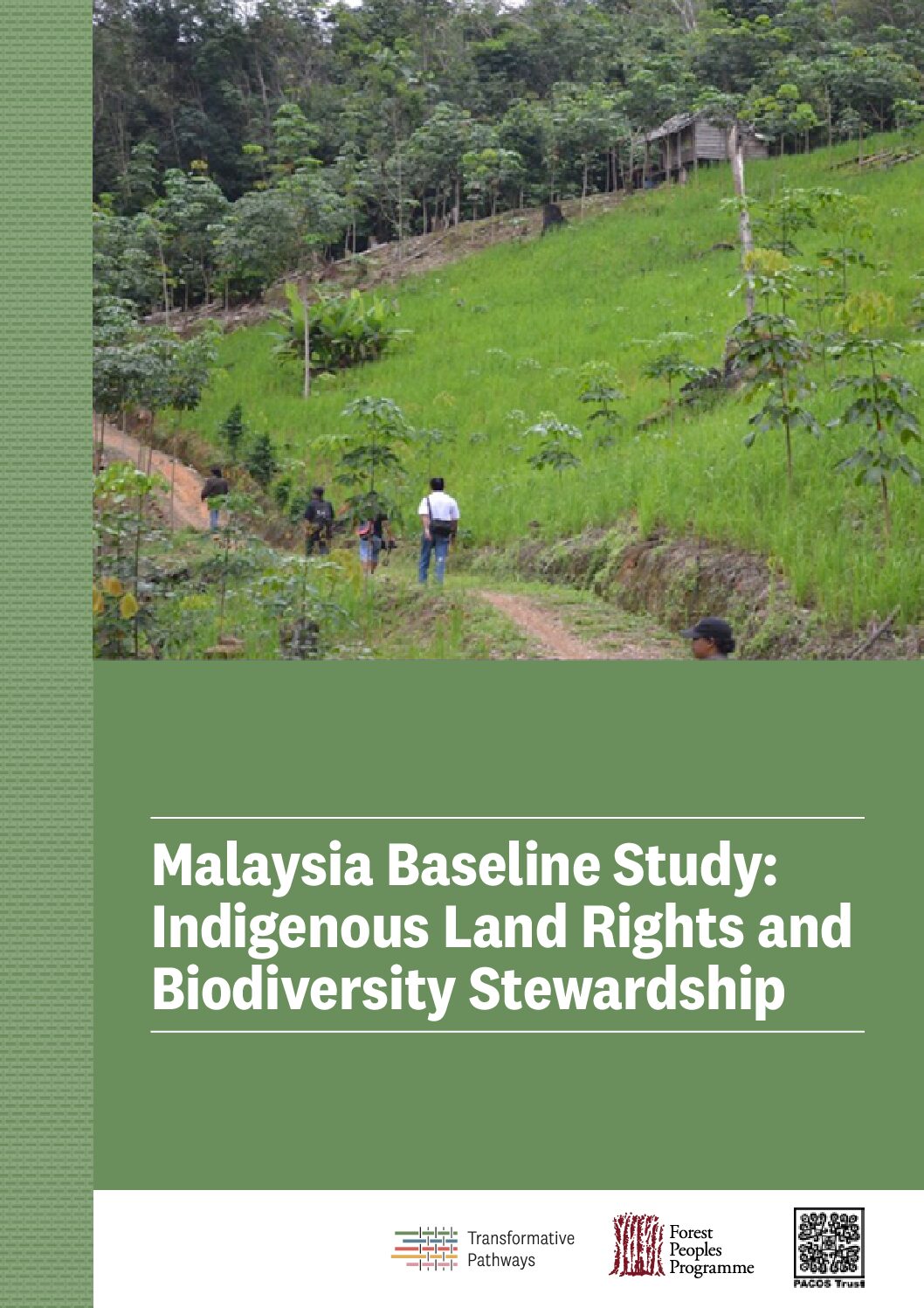
This baseline study assesses the “enabling conditions” for Indigenous Peoples’ rights in Malaysia, with a specific focus on the State of Sabah. Conducted as part of the Transformative Pathways project, the report analyzes the extent to which current legal and policy frameworks recognize, protect, or hinder indigenous stewardship of biodiversity.
The study finds that Sabah is characterized by a state of legal pluralism, where robust rights recognized by the Judiciary (Common Law) often clash with restrictive procedures enforced by the Legislature and Executive (Statutory Law). While the Federal Constitution and landmark court rulings affirm Native Customary Rights (NCR) as pre-existing proprietary rights, the statutory machinery for recognizing these rights—specifically the Sabah Land Ordinance and Forest Enactment— often imposes administrative barriers that render these rights difficult to realize in practice.
Dashed line