This post was co-written by Hernán Flores (Technical lead for the Autonomous Territorial Government of the Wampis Nation) and Dr. Albana Berberi (Interdisciplinary Centre for Conservation Science).
Freshwater turtles are long-lived animals that play an important role in maintaining healthy aquatic ecosystems. They also provide countless cultural, ecological, and livelihood benefits for local communities. Yet around the world, freshwater turtle populations are declining due to many threats, such as habitat loss and destruction, as well as overharvesting and illegal poaching.
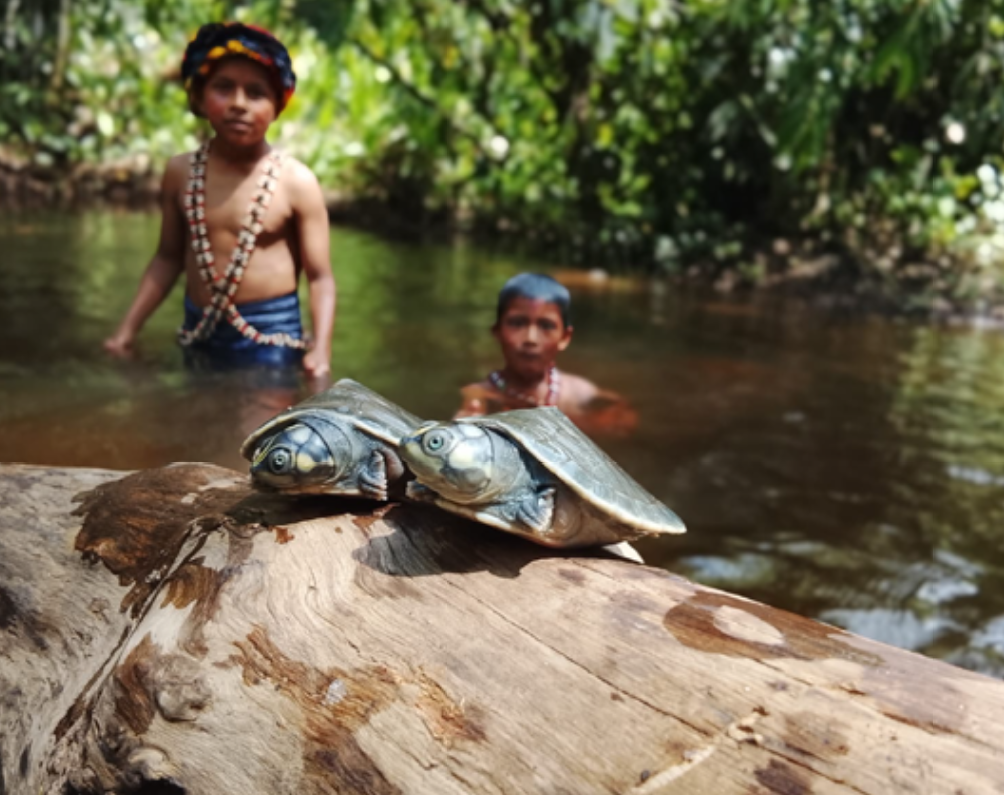
Despite these global challenges, Indigenous Peoples and local communities are leading inspiring freshwater turtle conservation efforts. One such example is found in Peru, where the Autonomous Territorial Government of the Wampís Nation (GTANW) has established a successful community-led initiative to repopulate two native freshwater turtle species: the taricaya and the charapa. Through their efforts, tens of thousands of turtle eggs have been collected for the restocking program, contributing to increased survival rates of the hatchlings of these culturally and ecologically important species.
Building on the Wampís Nation’s turtle conservation initiative, we developed the guide Community Monitoring of Freshwater Turtles. The guide provides practical, step-by-step support for establishing and implementing community-led freshwater turtle monitoring programs. It was created to complement the Wampís Nation’s turtle repopulation initiative, and to support Indigenous Peoples and local communities around the world who are also interested in protecting freshwater turtles in their own territories. This guide complements the Transformative Pathways guide, Community Monitoring of River Health and Biodiversity, that provides further technical support on monitoring aquatic ecosystems.

The Wampís Nation’s Turtle Initiative Today
The results obtained during the first three years demonstrate that the joint efforts between the communities and the Wampis Nation are yielding concrete results towards the recovery of the taricaya and charapa populations in the Morona and Santiago river basins.
Since 2023, six Wampís communities have been carrying out activities to protect nesting beaches, manage eggs and release hatchlings. These actions form part of a conservation strategy designed and implemented by the communities themselves, with technical support from GTANW.
During 2023, 3,205 taricaya hatchlings and 76 charapa hatchlings were released. In 2024, 1,392 taricayas and 856 charapas were reintroduced, showing a significant increase in the number of hatchlings of the latter species, considered one of the most vulnerable in the Amazon. In 2025, the programme achieved its best results to date, with the release of 4,724 taricaya hatchlings and 650 charapa hatchlings.
Overall, between 2023 and 2025, the Wampís communities managed to release 10,221 taricaya hatchlings and 1,582 charapa hatchlings, bringing the total number of turtles returned to the rivers and streams of the territory to 11,803. Beyond the figures, these results reflect the communities’ commitment to caring for their territory. The protection of nesting beaches, the responsible management of eggs and the release of hatchlings are all being carried out to strengthen the conservation of these species and demonstrate the commitment of the Wampis to Indigenous land management that can deliver tangible results for Amazonian biodiversity.
How will the new turtle monitoring guide be used to improve the programme?
From 2026, the Wampís Nation will roll out the Community-Based Freshwater Turtle Monitoring Guide, a tool that will provide a more accurate understanding of how taricaya and charapa populations are faring in the Morona and Santiago river basins.
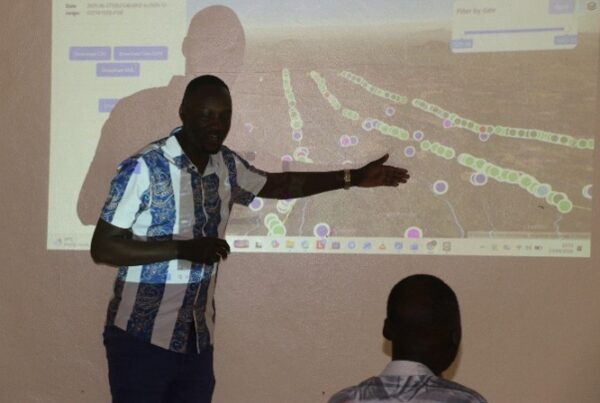
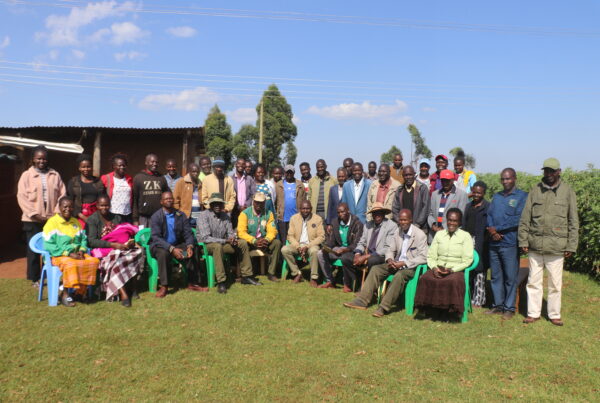
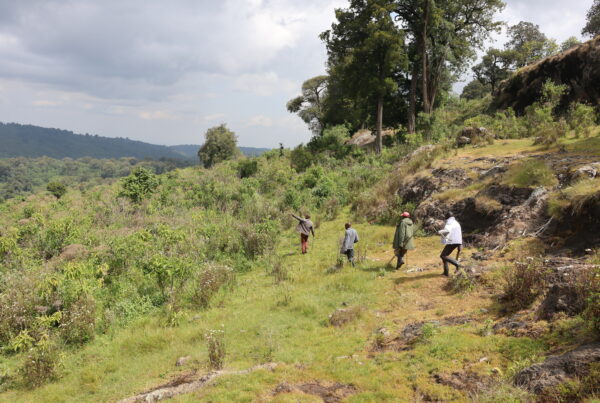
Implementation of the guide will begin with the training of community monitors and the GTANW technical team, who will apply a standard methodology to record data across different areas of the territory. Each community will select sections of rivers, streams, ponds and nesting beaches where regular turtle monitoring will take place.
The monitoring will enable the recording of aspects such as the presence of juvenile and adult turtles, the number of nests, hatching success, the threats facing the species and the conditions of their habitats. With this information, it will be possible to assess changes in populations and gain a better understanding of the results of the reintroduction programme launched in 2023.
An important aspect of this guide is that it integrates the traditional knowledge of the Wampís people with monitoring tools. For generations, community monitors have known the beaches where turtles nest, the breeding seasons, the routes they use and the changes that occur in the rivers. This knowledge will be systematically recorded and supplemented with technical information, providing a more comprehensive picture of the status of the populations.
The monitoring results will help to improve management decisions. If new nesting beaches, changes in turtle numbers or new threats are identified, communities will be able to adjust their protection strategies and strengthen conservation efforts where they are most needed.
For the Wampís Nation, this guide marks a new phase in the conservation programme. It will not only enable the impact of the work carried out since 2023 to be assessed, but also strengthen Indigenous territorial management through information generated by the communities themselves, ensuring that the recovery of the taricaya and charapa continues in the coming years.