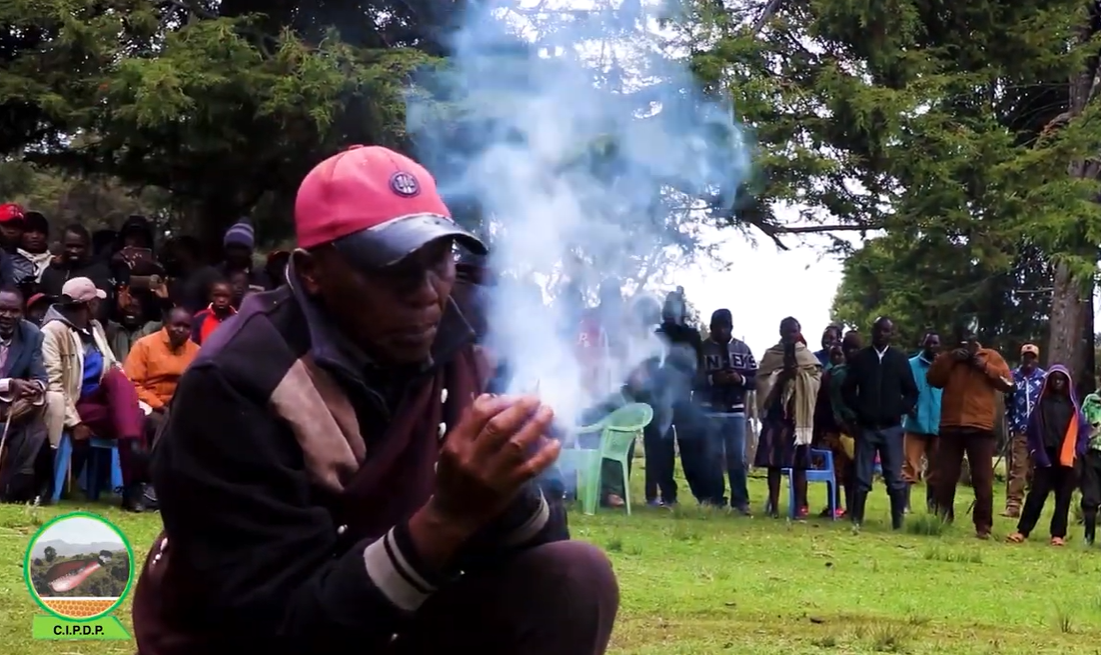
How do Indigenous communities harvest honey without harming bees or the environment? During Indigenous Peoples’ Day in Chepkitale, elders demonstrated to the younger generation how to make fire and harvest honey.
The Ogiek Indigenous community of Mt.Elgon are historically a hunter-gatherer and livestock keeping community. They have thrived because of their rich Indigenous knowledge in medicine, culture, food and weather patterns. The elders are the custodians of this knowledge, and they have always found ways to pass it on.
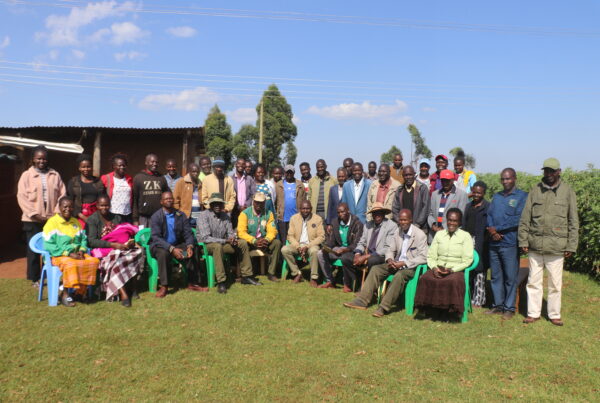
With support from IKI through the Transformative Pathways project, the community gathered in Chepkitale on 9th August 2025 to mark Indigenous Peoples Day. The theme was keeping Chepkitale a plastic-free zone, but the day itself was really about elders speaking and youth listening.
The main demonstration was beekeeping the old way. No matches, no lighters. The elders rubbed sticks together until embers caught and smoke began to rise. The smoke is not used to attack the bees but to push them gently out of the hive for a short while. With the bees out of the way, honey can be harvested cleanly and the colony left to continue. The elders also showed how to handle the fire safely so it doesn’t destroy the forest the community depends on.
The scene says a lot about how the Ogiek live. Harvest and care are the same act. The bees are not destroyed for their honey and the forest is not burned. This is part of why the community has lasted:- their practices have always been towards conservation and their wellbeing has always been tied to the wellbeing of the land.