The empowerment of Indigenous communities to defend their Land, Territory, and Resources (LTR) relies on a strategic integration of traditional knowledge (TK) and modern advocacy skills.
This process, as highlighted in the “Basic Advocacy & Traditional Knowledge Workshop held in Penampang in 15-17 December 2025, centers on transforming oral heritage into “black and white” (evidence) documentation to serve as a legal and political “shield”. By identifying specific Identity Markers and mastering systematic advocacy, communities can move from a reactive stance to a proactive management of their ancestral domains.

Mr. Jubili Anilik explaining Native Customary Rights cases in Sabah and key legal points from the Sabah Land Ordinance. Credit PACOS Trust
The Role of Identity Markers in Securing LTR
Identity Markers are the unique cultural elements that distinguish an Indigenous group and demonstrate their continuous relationship with their territory. They are not merely cultural artifacts but serve as evidence of origin, belonging, and governance. During the workshop, participants from the Dusun Bundu, Dusun Tindal, and Murut Tahol groups identified several key markers:
- Language and Oral Traditions: Mother tongues and ancestral stories such as the Naru Bangkur or Sundait (riddles) carry the history of land use.
- Cultural Expressions: Traditional music (e.g., Togungak, Bungkau, Tongkungon) and dances (e.g., Sumazau, Mengunatip) are intrinsically tied to the land’s rhythms and ceremonies.
- Material Culture and Craftsmanship: The creation of tools like the Saging (basket), Barait, and Sopuk (blowpipe) requires specific forest resources, proving a community’s reliance on and management of those resources.
- Sustainable Resource Management: Traditional agricultural practices like Ranahon (wet rice) and Padi bukit (hill rice), as well as the use of traditional herbs (e.g., Tegiung, Sapang), demonstrate deep ecological knowledge.
Documenting these markers in a Village Profile is essential because it provides the proof that external agencies or companies often demand. It counters claims that land is unoccupied by showing it has been a managed “Territory of Life” (ICCA) for generations.
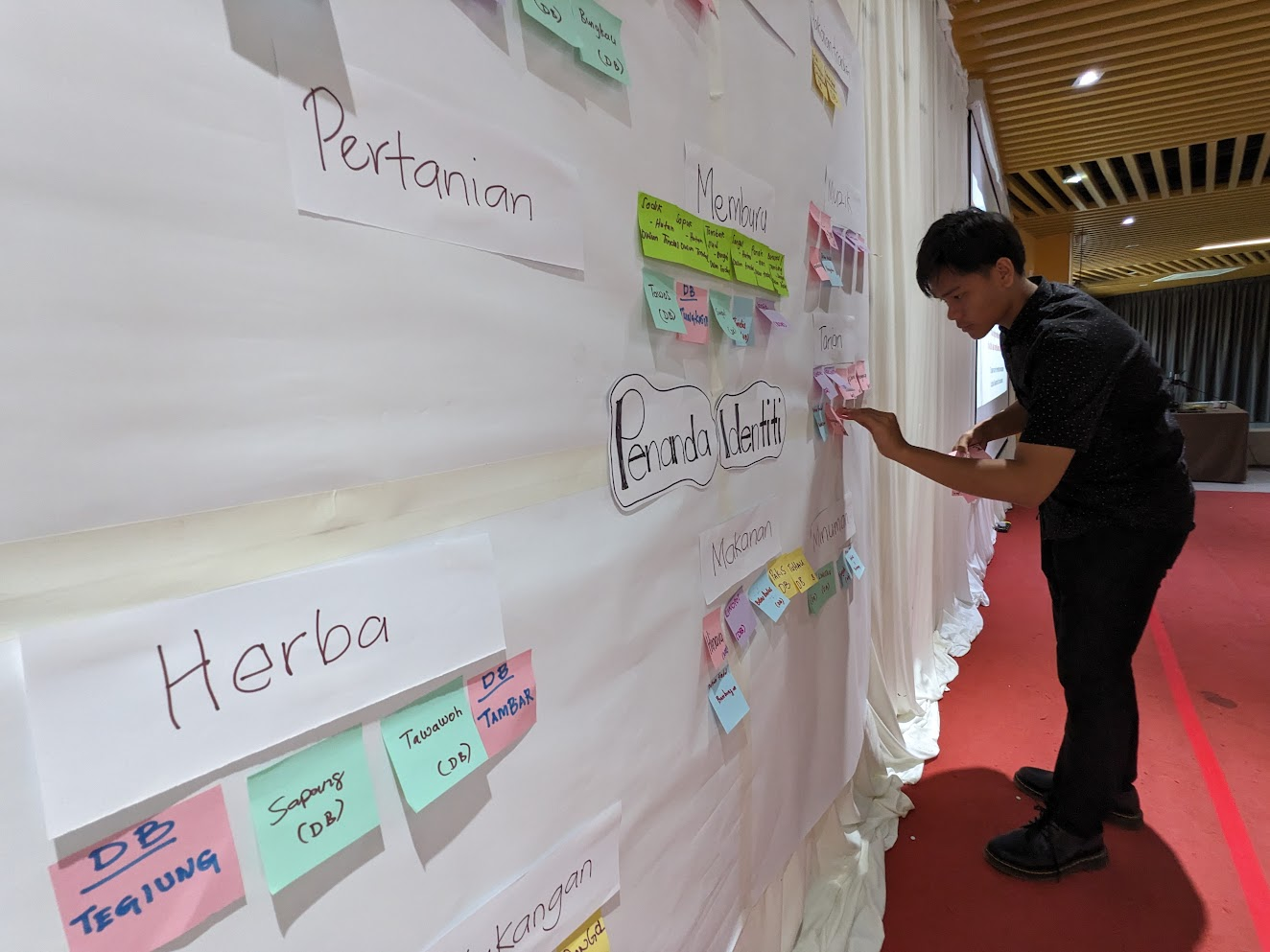
Participants identify their key identities on their practices, customs and cultures in their community. Credit PACOS Trust
Strategic Advocacy: “Shield” and “Sword”
Advocacy is defined as a planned process to create change by influencing decision-makers. For LTR protection, this involves navigating a complex Legal Landscape where customary law, state/federal ordinances, and international frameworks (like UNDRIP and FPIC) overlap.
1. Native Customary Rights (NCR) as a Shield
A foundational principle in advocacy is that Native Customary Rights (NCR) are basic property rights that exist even without a formal title or grant. NCR acts as a “perisai” (shield), affirming that Indigenous peoples are not intruders in their own territory. However, communities must be vigilant; for instance, Section 13 of the Land Ordinance requires active monitoring of government notices to ensure that land is not gazetted for other purposes without the community’s knowledge.
2. Evidence as the “Sword”
To influence authorities, communities must provide three types of evidence: oral (testimonies from elders), documentary (village profiles and protocols), and physical (maps and protocols). Community mapping, using both GPS and sketch maps, is a critical advocacy tool because it translates traditional boundaries into a format that government agencies understand. This evidence constitutes the “sword” needed for successful negotiation or litigation.
Stakeholder Mapping and Negotiation Skills
Capacity building also involves teaching communities how to strategically engage with outside actors through Stakeholder Mapping. This process involves:
- Identifying all parties involved (e.g., District Office, Fisheries Department, private companies).
- Assessing their power levels (high, medium, or low).
- Determining their stance (supporting, neutral, or opposing).
In negotiation and lobbying, the workshop emphasized the importance of professionalism and collective mandates. Representatives must speak on behalf of the village consensus, not as individuals, and follow strict protocols. Key advice included avoiding “flowery” or emotional language and instead providing clear, written demands and documentation to ensure a formal record of the dialogue.

Role play session: participants discussing on the points to present to the “agencies”. Credit: PACOS Trust

Role play session: participants discussing on the points to present to the “agencies”. Credit PACOS Trust

Mr. Ricklend Christopher sharing tips and strategies for negotiating with multiple actors. Credit PACOS Trust

Madam Rufina Koyou explaining the importance of culture and customs in protecting Indigenous Lands, Territories, and Resources. Credit: PACOS Trust
Operationalizing Capacity: CBMIS and Village Protocols
Equipping communities also means providing technical tools for ongoing stewardship. All communities are now implementing Community-Based Monitoring and Information Systems (CBMIS). These systems involve:
- Using digital tools like the Kobo app and GPS to monitor forest health, water quality (e.g., gravity water sources), and traditional crops.
- Developing Village Protocols to regulate external access to resources based on the principle of Free, Prior and Informed Consent (FPIC).
- Monitoring specific local issues, such as the influx of predator fish in Tagal zones (traditional river management).
Currently, eight community protocols are still in the draft stage. Two audio recordings and books on traditional knowledge have been documented.
Addressing Gaps and Future Sustainability
To further strengthen community capacity and ensure long-term sustainability, several areas can be enhanced:
- Enhancing Technical Capacity: Providing additional hardware (such as laptops and cameras) and continuous technical training would significantly improve the quality and consistency of documentation efforts.
- Bridging the Intergenerational Gap: Creating structured mentorship spaces between elders and youth can help transfer traditional knowledge more effectively. Encouraging youth participation through meaningful roles can increase their interest and sense of ownership.
- Allocating Adequate Time and Resources: Securing dedicated funding and setting aside specific time for documentation activities would support more consistent and long-term efforts.
- Promoting Inclusive Participation: Greater involvement of women and youth should be prioritised. Youth can contribute through technical roles such as photography, videography, and digital mapping, while women, often key holders of knowledge on traditional medicine and food systems, can play a central role in documenting and transmitting cultural knowledge.
Conclusion: Windows of Opportunity
The Transformative Pathway program supports communities to be “ready with documents” so they do not meet decision-makers empty-handed. With upcoming political events and potential shifts in government, there are unique windows of opportunity to influence high-level officials, such as the Minister of Natural Resources and Environmental Sustainability (NRES). By combining their unique Identity Markers with systematic advocacy and monitoring skills, Indigenous communities can secure their rights, protect their LTR, and ensure that their ancestral territories remain vibrant “Territories of Life” for future generations.

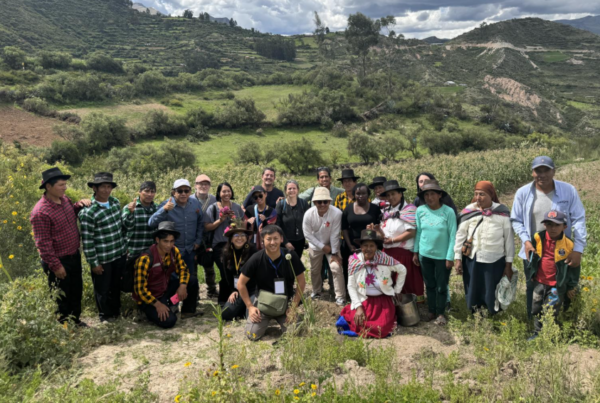
Group photos during the training on the 15-17 December 2025, D’Arc Hotel, Penampang. Credit PACOS Trust