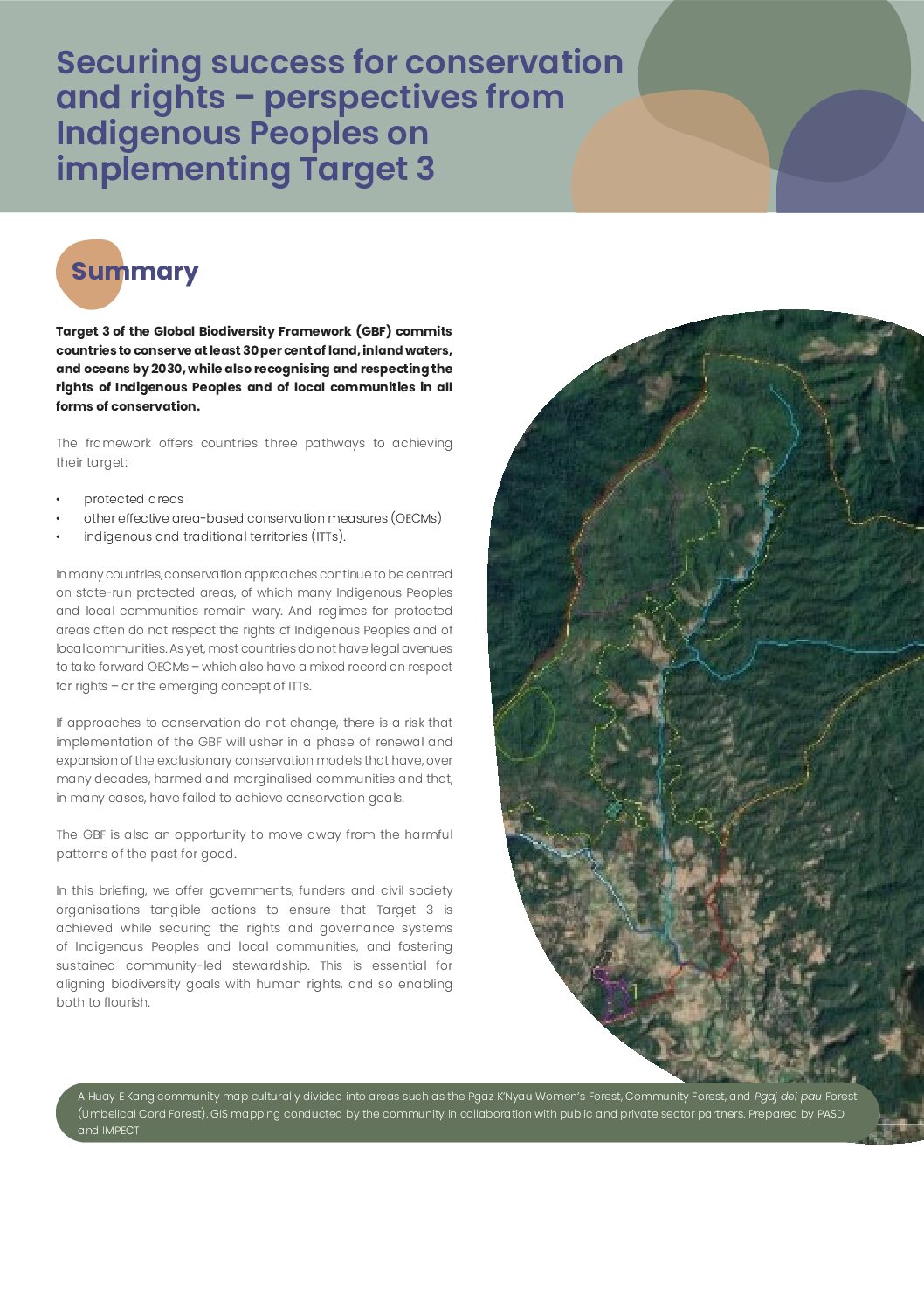
Target 3 of the Global Biodiversity Framework (GBF) commits countries to conserve at least 30 per cent of land, inland waters, and oceans by 2030, while also recognising and respecting the rights of Indigenous Peoples and of local communities in all forms of conservation.
The framework offers countries three pathways to achieving their target:
- protected areas
- other effective area-based conservation measures (OECMs)
- indigenous and traditional territories (ITTs).
In many countries, conservation approaches continue to be centred on state-run protected areas, of which many Indigenous Peoples and local communities remain wary. And regimes for protected areas often do not respect the rights of Indigenous Peoples and of local communities. As yet, most countries do not have legal avenues to take forward OECMs – which also have a mixed record on respect for rights – or the emerging concept of ITTs.
If approaches to conservation do not change, there is a risk that implementation of the GBF will usher in a phase of renewal and expansion of the exclusionary conservation models that have, over many decades, harmed and marginalised communities and that, in many cases, have failed to achieve conservation goals.
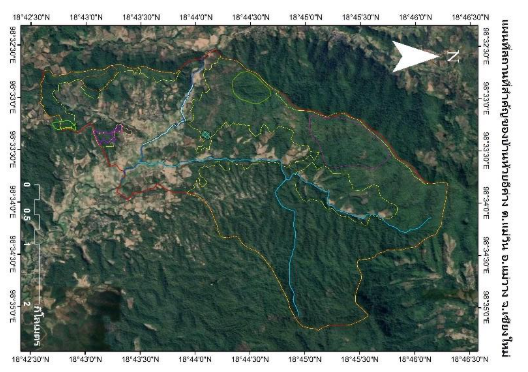
In this briefing, we bring together case studies from Indigenous Peoples in three countries – Kenya, Guyana and Thailand – on rights-respecting approaches to implementing the three Target 3 pathways. Their experiences reveal barriers but also potential opportunities to diversify and strengthen rights-based approaches to implementing the pathways.
The reflections in this briefing aim to advance practical discussions on ways forward for Target 3 that achieve conservation outcomes while also respecting rights. And the conclusions aim to offer clear and direct actions that governments, funders and civil society organisations can take, together and separately, to achieve Target 3 via the three pathways.
This briefing has been developed as part of the Conservation Pathways project.